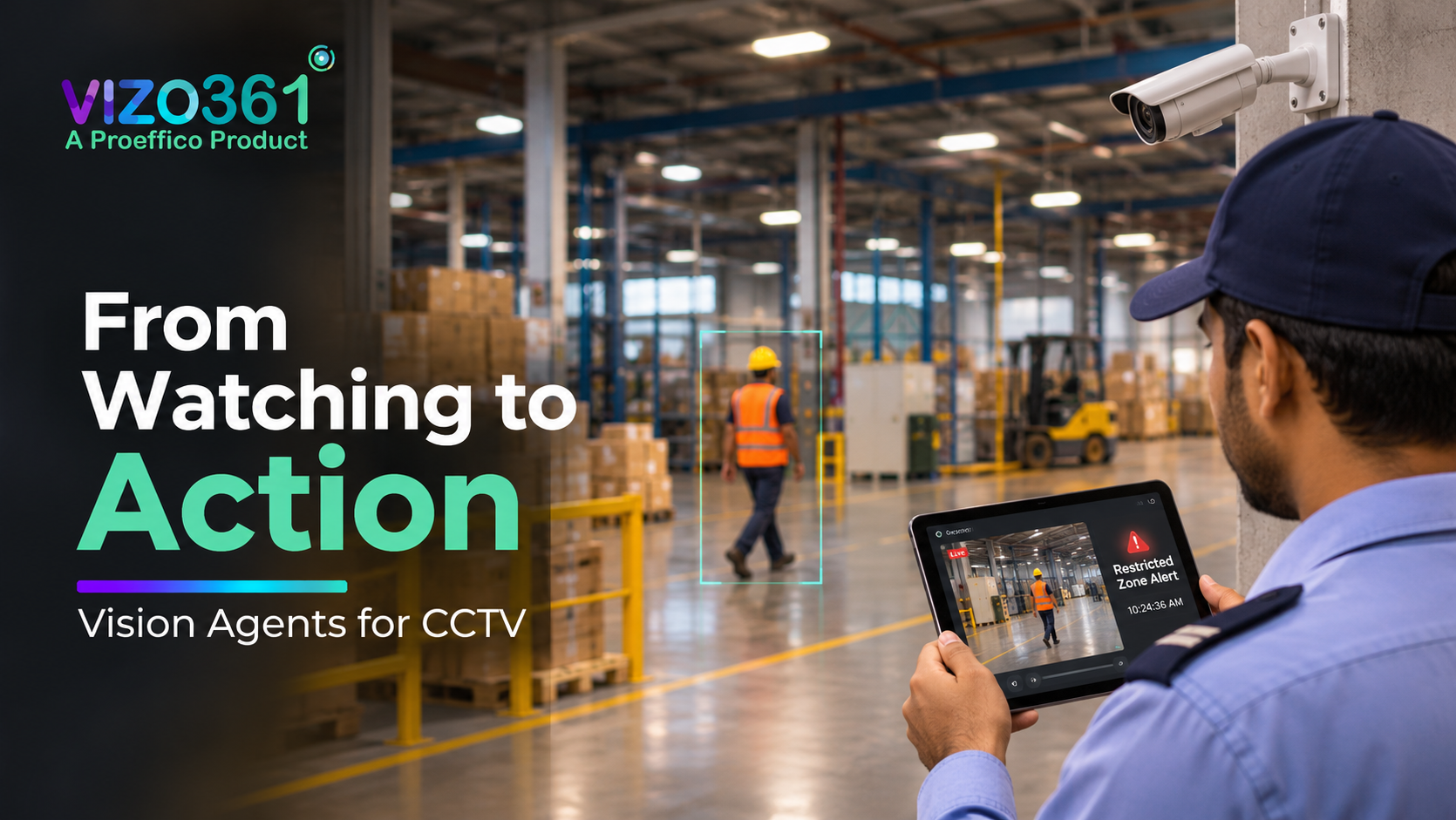
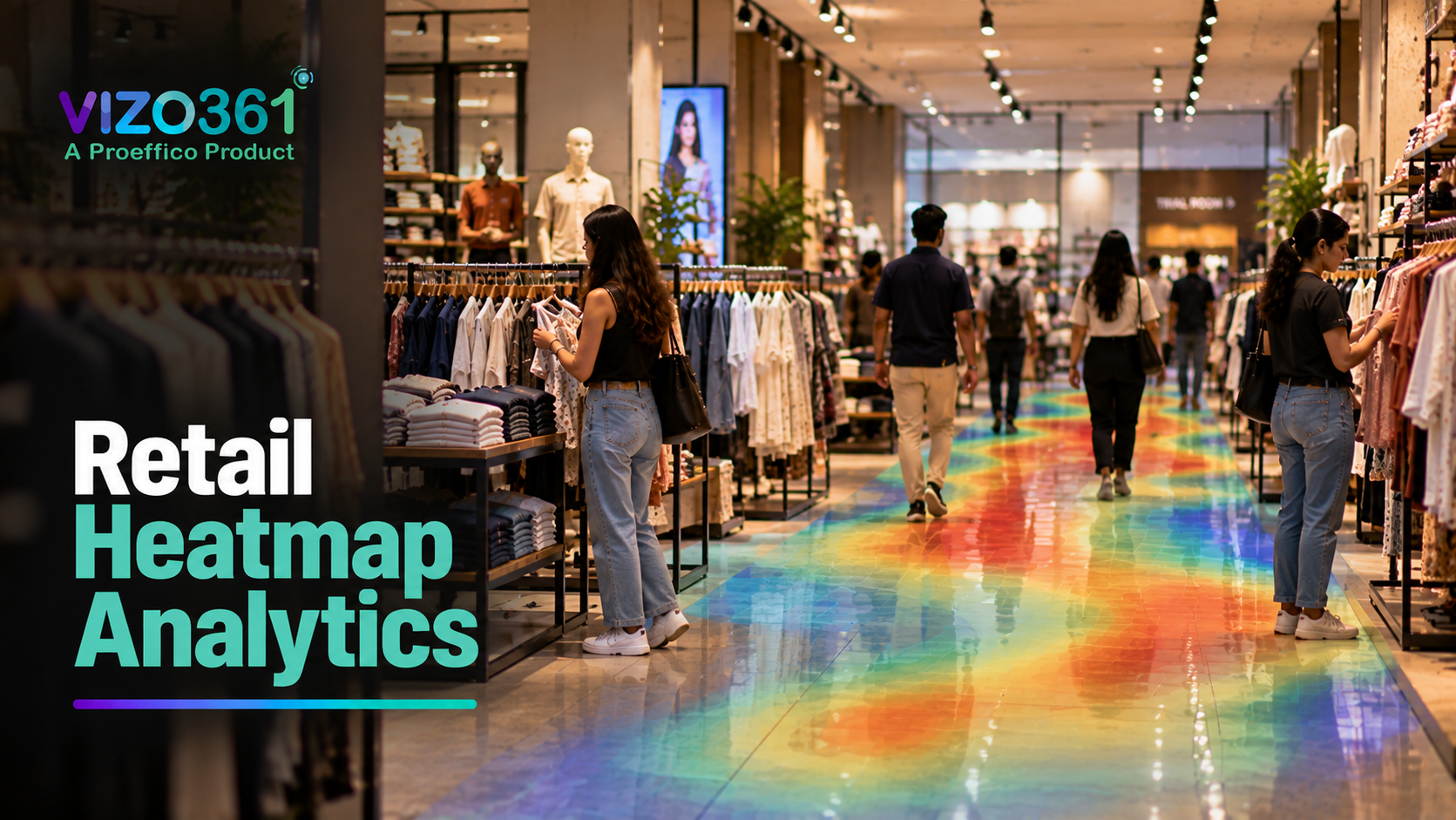
Your cameras have been watching for years. The trouble is that nobody has been watching the cameras. Vision agents are the piece of software that fills that gap: they read your CCTV feeds continuously, spot specific conditions, and push the right alert to the right person while there is still time to act. If you have heard the term and wondered whether it is a real category or a rebrand of "video analytics", this guide explains what vision agents are, how they work on vision agents CCTV setups you already own, and where you should stay sceptical. ## What a vision agent actually is A vision agent is a focused piece of AI software that watches one or more camera feeds for a defined job. It is not a general-purpose "smart camera". Each agent is built around a single question an operations or security head already asks every day: - Is anyone in this restricted zone? - Is that smoke, or steam? - Which vehicle just came through the gate, and was it expected? - Is this passage getting too crowded? - Is the person at the cash counter using a phone? The "agent" part matters. A traditional analytics rule only produces a detection. An agent is set up to carry that detection through to something useful: check it against rules, decide whether it is worth interrupting someone, send it to the right person on the right channel, and keep a searchable record of what happened. The aim is that a human spends time on decisions, not on staring at a wall of monitors. ## How vision agents differ from plain CCTV and basic motion alerts Plain CCTV is a recorder. You find out what went wrong when somebody scrubs through footage after the fact. Basic motion detection tries to help, but anyone who has lived with it knows the result: a phone full of alerts triggered by shadows, insects and passing headlights, which everyone eventually mutes. Vision agents sit one level above that. They look for specific things (a person, a vehicle, a flame, a hard hat, a queue) in specific parts of the frame, at specific times, and raise an alert only when a condition you defined is met. That is why the quality of the configuration matters as much as the model underneath. ## How VIZO361 runs vision agents on the cameras you already have VIZO361 is built on a simple premise: the CCTV already installed at your factory, store, campus or warehouse is the sensor. There is no rip-and-replace. VIZO361 connects to existing IP cameras and recorders over standard protocols (RTSP and ONVIF), which covers 40+ camera brands, and processing can run at the edge, in the cloud, or as a hybrid, depending on your bandwidth, latency and data-residency needs. The platform is ISO 27001 backed, which matters because video is sensitive data. The agents are packaged as modules, and it helps to know what the acronyms mean in plain English: - **Fire and smoke detection:** spots visible flame or smoke on camera so someone is alerted early. - **ANPR (automatic number plate recognition):** reads vehicle number plates at gates and logs them. See our guide to ANPR number plate recognition in India. - **PIH (phone-in-hand) detection:** flags phone use in zones where it is a safety or shrinkage risk. - **Footfall and crowd density:** counts people and measures how crowded an area is. - **Cash-counter monitoring:** watches the highest-risk spot in a store. - **Guard-sleeping detection:** checks whether a monitoring post is actually attended. - **Face recognition (FR):** a separate, consent-based capability for access control, used only where policy and law allow it. - **VMS (video management system):** the layer where you view, search and manage feeds and alerts. ## Detecting conditions, not identifying people This is the part most buyers want clarity on, so it is worth stating plainly. Most vision agents detect conditions and events: a person is in a zone, a plate was read at the gate, smoke appeared, an area crossed a crowd limit. They do not need to know who anyone is to do that job. A PPE or zone alert says "someone without a helmet entered Bay 3", not "this named employee broke a rule". Identity-linked capabilities such as face recognition exist, but they are a separate module with their own consent, access control and legal considerations. A sensible rollout starts with condition-based agents, tells people what the cameras are used for, and decides on identity features deliberately rather than by default. ## Where vision agents earn their keep From the sites we work with and the questions buyers ask, the same use cases come up repeatedly: 1. **Factories:** PPE checks, restricted-zone alerts and fire or smoke detection. Our piece on video analytics for manufacturing safet goes deeper. 2. **Warehouses and logistics:** gate and dock monitoring, vehicle logs, after-hours movement alerts. 3. **Retail:** cash-counter monitoring, footfall and queue visibility across outlets. 4. **Campuses and gated communities:** vehicle access, perimeter alerts and crowd awareness at events. 5. **Facilities:** checking that guards and monitoring posts are doing what the rota says. None of these is exotic. What changes is that the camera stops being evidence collected after the fact and becomes an early warning. ## What vision agents cannot do Honest limits are part of choosing well: - **Accuracy depends on your site.** Camera placement, angle, resolution, lighting, weather and how cluttered the frame is all affect results. A camera at a chokepoint will outperform one covering a wide, busy area from far away. - **No system catches everything.** Be wary of any vendor that promises perfect or zero-miss detection. The realistic goal is fewer blind spots and faster response, not infallibility. - **Alerts need an owner.** If nobody is assigned to act on an alert, it becomes noise. Decide who gets what, and what they are expected to do. - **Tuning takes a few weeks.** Zone boundaries and sensitivity usually need adjusting against real conditions before the alert stream is trustworthy. - **They support people, not replace them.** Judgement still belongs to your security and operations team. ## How to evaluate a vision agent platform Ask these questions before you sign anything: 1. Does it run on my existing cameras, or does it need new hardware? 2. Can I trial it on a few of my own feeds, in my own lighting and layout? 3. Does it detect conditions without identifying individuals unless I switch that on? 4. Where is video processed (edge, cloud, hybrid), and who can access it? 5. How are alerts routed, and can they reach the people who actually respond? The trial question is the important one. A demo on a vendor's clean sample footage tells you very little. Your own cameras, with your own glare, dust and crowded corners, tell you what you will actually get. ## Where to start Pick one problem with a clear cost, such as an unattended gate, a recurring PPE lapse or a cash counter that worries you, and run a pilot on the cameras already covering it. Review what got flagged with the people who will act on it, tighten the zones, and expand from there. For a broader overview, read our complete guide to video analytics surveillance. Your cameras already see most of what matters on your site. Book a demo - see it on your cameras and we will show you what vision agents pick up on your own feeds. ## Frequently Asked Questions ### What are vision agents in CCTV? Vision agents are AI software modules that watch camera feeds for a specific job, such as detecting smoke, reading number plates or counting people. When a defined condition is met, they send an alert to the right person and keep a record, so your CCTV is used for prevention and not only for review. ### Do vision agents work on my existing CCTV cameras? Yes. VIZO361 connects to existing IP cameras and recorders using standard protocols like RTSP and ONVIF, covering 40+ brands, so there is no rip-and-replace. Results still depend on camera angle, resolution and lighting, which is why we check feeds on site before rollout. ### Do vision agents identify individual people? Most agents detect conditions and events, such as a person entering a restricted zone or a vehicle at a gate, without identifying anyone. Face recognition is a separate module with its own consent and legal requirements, and it should be enabled only where it is genuinely needed and permitted. ### How accurate are vision agents? Accuracy varies with camera placement, lighting, weather and how crowded the scene is. No honest vendor can promise perfect or zero-miss detection. The sensible approach is a trial on your own cameras, where you can measure what is detected and what is missed. ### How are vision agents different from motion detection? Motion detection reacts to any change in the frame, so it produces many false alerts. Vision agents look for specific objects and conditions in defined zones and times, and only alert when your rules are met. That makes the alerts easier to trust and act on.
General 2026-11-10 8 min read VIZO361° Team
What Are Vision Agents? Turning CCTV Into Action (2026)